
Intelligent Equipment Manufacturing
Main Types of Water Treatment Chemicals
Coagulants and Flocculants
Coagulants, such as polyaluminium chloride (PAC), aluminium sulfate and ferric salts, neutralize the electrical charge of fine particles so they can stick together. Flocculants, most commonly polyacrylamide (PAM), then bind the small clumps into larger flocs that settle or filter easily. They are the workhorses of clarification and sludge dewatering.
Scale Inhibitors
Scale inhibitors — also called antiscalants — interfere with the crystallization of calcium, magnesium, silica and other sparingly soluble salts. They are essential in cooling water circuits and in reverse osmosis pretreatment, where they allow higher recovery rates and longer membrane life.
Corrosion Inhibitors
Corrosion inhibitors form a protective film on metal surfaces or alter the electrochemistry of the water to slow attack on steel, copper and other alloys. They protect boilers, cooling circuits, heat exchangers and pipelines from pitting and general corrosion.
Biocides and Disinfectants
Biocides control algae, bacteria, fungi and biofilm in cooling towers, process water and storage systems. They come in oxidizing forms, such as chlorine-based products, and non-oxidizing forms for targeted control. Proper dosing and monitoring prevent both biofouling and the development of resistant organisms.
pH Adjusters and Neutralizers
Caustic soda, acids and lime raise or lower pH to the range required for coagulation, corrosion control, biological treatment or discharge compliance. Stable pH control is often the precondition for every other chemical to work.
Defoamers and Auxiliary Agents
Defoamers control foam in aerated basins and process streams. Other auxiliary agents include chelating agents, sludge conditioners and odor control products that support specific treatment steps.
How Water Treatment Chemicals Work Together
Treatment chemicals rarely act alone. A typical sequence might be: pH adjustment to optimize conditions, coagulation and flocculation to capture suspended solids, scale and corrosion control to protect the system, and biocides to keep biological growth in check. Each product has a defined role; compatibility and correct dosing determine whether the sequence works or fails.
|
Chemical Type |
Main Function |
Typical Use |
|
Coagulants (PAC, alum, ferric salts) |
Neutralize particle charge, form micro-flocs |
Clarification, wastewater treatment |
|
Flocculants (PAM) |
Bind flocs for settling or filtration |
Sedimentation, sludge dewatering |
|
Scale inhibitors |
Prevent mineral deposition |
Cooling water, RO pretreatment |
|
Corrosion inhibitors |
Protect metal surfaces |
Boilers, cooling circuits, pipelines |
|
Biocides |
Control algae and bacteria |
Cooling towers, process water |
|
pH adjusters |
Maintain optimum pH range |
Pretreatment, neutralization |
|
Defoamers |
Suppress foam |
Aeration basins, process streams |
How to Choose the Right Water Treatment Chemicals
The same problem can have different causes, so selection should always start from evidence rather than habit. Work through the following steps:
· Start with a water analysis. The analysis tells you which chemical family addresses your specific water — hardness, turbidity, organics or microbiological activity.
· Define the system. Cooling water, boiler water, RO feed and wastewater each have different chemistry and different goals; use products designed for your application.
· Check compatibility. Verify that new chemicals do not react badly with existing products, membranes, resins or metallurgy. Ask for compatibility data before switching.
· Dose on measured demand. Use jar tests, corrosion coupons or membrane performance data to set the dose. Over-dosing raises cost and can create new fouling.
· Buy from a supplier who supports. A good supplier provides dosage recommendations, dosing equipment advice, on-site support and consistent product quality.
Safety and Handling Best Practices
· Read the safety data sheet (SDS) before handling any chemical.
· Use appropriate personal protective equipment: gloves, goggles and protective clothing.
· Store chemicals in labeled, compatible containers away from incompatible materials.
· Keep dosing areas ventilated and provide emergency showers and eyewash stations.
· Train operators in correct dosing, spill response and first aid procedures.
· Follow local regulations for the transport, storage and disposal of chemical products and containers.
Frequently Asked Questions
How do I know which chemicals my water needs?
A complete water analysis is the starting point. It reveals turbidity, hardness, alkalinity, total dissolved solids, organics and microbiological activity, which point to the right chemical families and doses.
Can I use one chemical for everything?
Rarely. Each chemical solves a specific problem, and using a single product to cover several problems usually wastes money or causes side effects.
What is the difference between oxidizing and non-oxidizing biocides?
Oxidizing biocides, such as chlorine-based products, react broadly and quickly; non-oxidizing biocides target specific organisms and are used for longer-lasting control. Many programs alternate between the two.
How often should I review my chemical program?
Whenever source water, production load or regulations change — and at least once a year. Water chemistry drifts, and the program should drift with it.
Build a Chemical Program That Works
Effective water treatment is a program, not a product list. Start from analysis, match chemicals to your system, dose on measured demand, and monitor results. Working with an experienced supplier who understands equipment and water chemistry helps you avoid trial and error — and keeps your plant running longer with lower cost.
Untreated or poorly treated water can cause a long list of problems. Suspended solids and organic matter can clog pipes and foul heat exchangers; dissolved minerals can form scale on boiler tubes and membrane surfaces; corrosive ions can attack pumps and vessels; and microorganisms can compromise both product quality and public health. Each of these problems has a different root cause, which is why most industrial water treatment systems combine several technologies rather than relying on a single piece of equipment.
At the same time, discharge regulations are becoming stricter in many markets. A well-designed treatment system helps you stay within permitted limits, reduce water consumption through reuse and recycling, and lower the total cost of ownership over the life of the plant.
Main Types of Industrial Water Treatment Equipment
Physical Filtration and Screening
Bar screens and strainers remove large debris at the intake, while multimedia filters, sand filters and cartridge filters capture finer suspended solids. Filtration is usually the first stage of a treatment line because it protects the equipment downstream from abrasion and fouling.
Sedimentation and Clarification
Sedimentation tanks and clarifiers allow suspended solids to settle out by gravity. Dissolved air flotation (DAF) units accelerate separation by attaching fine air bubbles to particles, which is especially effective for oily wastewater and low-density solids. These units reduce the load on the polishing stages that follow.
Membrane Systems
Reverse osmosis (RO), nanofiltration (NF) and ultrafiltration (UF) use semi-permeable membranes to remove dissolved salts, organics and microorganisms. RO is widely used to produce high-purity water for boilers, electronics and pharmaceutical processes, while UF is a common pretreatment for RO and a polishing step for turbid water.
Ion Exchange and Water Softening
Ion exchange resins swap unwanted ions for harmless ones. Softening resins remove hardness (calcium and magnesium) to prevent scale, while mixed-bed or demineralization systems produce very low-conductivity water for critical applications. Resin beds are regenerated with brine or acid and caustic on a scheduled cycle.
Chemical Dosing Systems
Dosing pumps and skid-mounted dosing units feed treatment chemicals — coagulants, flocculants, scale inhibitors, corrosion inhibitors, biocides and pH adjusters — into the water at a controlled rate. Accurate dosing is essential: too little chemical gives poor results, and too much wastes money and can create new problems.
Disinfection Systems
UV reactors, ozone generators and chlorine dosing systems control microbiological growth. UV and ozone are favored where chemical residuals are undesirable, while chlorine-based dosing remains popular for municipal-style and continuous-process disinfection.
How to Choose the Right Water Treatment Equipment
Start with your water, not with the equipment. Have a complete water analysis done for your source water and for the quality you need at the point of use. Then match each of the following factors to the design of the system:
· Source water quality. Test for turbidity, hardness, total dissolved solids, iron and manganese, organic matter, and microorganisms. The analysis determines which stages you need and in what order.
· Flow rate and capacity. Define the average and peak flow you must treat. Equipment should be sized for peak load with a reasonable safety margin, without being oversized to the point of waste.
· Target water quality. The required output quality — cooling water, boiler feed water, process water or discharge — sets the specification for membranes, resins and final polishing.
· Space and energy constraints. Different technologies occupy very different footprints and consume different amounts of energy. Clarifiers and sand filters need space; membrane systems need pumps and power.
· Operation and maintenance capability. Consider the skill level of your operators. Automated dosing and monitoring reduce labor, but also require spare parts and technical support.
· Budget and lifecycle cost. Compare not only capital cost but also chemical consumption, energy use, membrane and resin replacement, and maintenance labor over the equipment’s lifetime.
|
Equipment Type |
Primary Function |
Typical Application |
|
Bar screens / strainers |
Remove large debris |
Raw water intake protection |
|
Multimedia / sand filters |
Remove suspended solids |
Pretreatment, cooling water |
|
Clarifiers / DAF |
Gravity or air-assisted settling |
Wastewater, oily water |
|
Reverse osmosis |
Remove dissolved salts |
Boiler feed, high-purity water |
|
Ultrafiltration |
Remove colloids and microbes |
RO pretreatment, polishing |
|
Ion exchange / softeners |
Remove hardness and ions |
Softening, demineralization |
|
Dosing systems |
Feed treatment chemicals |
Chemical conditioning |
|
UV / ozone / chlorination |
Disinfection |
Microbiological control |
A Practical Selection Checklist
· Obtain a recent, complete analysis of your source water.
· Define average and peak flow rates and the required output quality.
· Map the treatment stages: pretreatment, primary treatment, polishing and disinfection.
· Ask suppliers for a design basis, equipment list and operating cost estimate.
· Check spare parts availability, warranty and local technical support.
· Plan for sampling points and monitoring so performance can be verified.
· Budget for commissioning, operator training and scheduled maintenance.
Operation and Maintenance Tips
· Monitor key parameters daily: flow, pressure, turbidity, conductivity and chemical residuals.
· Replace filter media, membranes and resins according to the supplier’s schedule or measured performance.
· Calibrate dosing pumps and probes regularly to avoid under- or over-dosing.
· Keep a logbook and compare trends; a gradual change is easier to fix than a sudden failure.
· Clean membranes and heat surfaces on a scheduled basis to protect performance and lifetime.
Frequently Asked Questions
How long does a water treatment system last?
Well-maintained steel tanks and piping can last 15–20 years; membranes typically last 2–5 years depending on feed quality and cleaning practice; resins last about 5–10 years.
Do I need both filtration and chemical dosing?
Most plants do. Filtration removes particles, while chemicals condition the water chemically. The combination usually gives the most stable and economical result.
Can I treat multiple water sources with one system?
Yes, if the water qualities are similar and the design basis accounts for the worst case. Very different sources are better served by separate treatment lines.
How much space does a system need?
It depends on the technology. Membrane skids are compact; clarifiers and media filters need more footprint. A supplier can provide a layout drawing for your site.
Get a Solution That Fits Your Plant
Every plant is different. The right approach is to work from your water analysis and production targets with a supplier who can design, supply and support a complete system — from filtration and membranes to dosing and disinfection. A properly matched system pays for itself through lower chemical use, fewer shutdowns and longer equipment life.
As winter approaches, many industrial wastewater treatment plants face common and unavoidable operational challenges. Low water temperature directly reduces the activity of water treatment chemicals, slows down flocculation and sedimentation, causes loose flocs, turbid outlet water, unstable water quality, and increased sludge output. Many standard water treatment systems that work well in spring and summer often fail to maintain stable performance in cold seasons, leading to excessive reagent consumption, higher operating costs, and even discharge standard violations.
Our company specializes in the design, production, and customization of high-stability industrial water treatment equipment, specially optimized for low-temperature winter environments. Our full-set water treatment systems include sewage filtration equipment, sedimentation equipment, dosing systems, circulating water treatment devices, and complete supporting process solutions, covering municipal sewage, chemical wastewater, textile printing and dyeing wastewater, electroplating wastewater, slaughterhouse and aquaculture wastewater treatment scenarios.
Different from ordinary standard equipment on the market, our winter optimized water treatment equipment adopts enhanced hydraulic design and precise automatic dosing control system. It effectively solves the problems of slow reaction speed and poor separation effect under low water temperature. The equipment maintains fast flocculation forming speed, clear solid-liquid separation, stable outlet water quality, and greatly reduces reagent dosage and sludge generation in cold weather.
All our water treatment equipment is manufactured in our direct factory with strict quality inspection, stable structural performance, low failure rate, and easy maintenance. We support personalized process customization according to local water quality, water volume, and winter minimum temperature of different countries and regions. We provide one-stop services including scheme design, production, installation guidance, commissioning, and after-sales technical support.
If you are looking for durable, low-temperature resistant, and cost-effective industrial water treatment equipment to help your factory pass winter stably and avoid seasonal water quality fluctuations, welcome to contact us for a free solution and quotation.
Meta Description
Industrial large‑scale reverse osmosis RO system for desalination & water purification. High water yield, stable performance. Match with RO water treatment chemicals. Request quotation.
Article Body
Large‑Scale Reverse Osmosis(RO) Water Treatment System
Large industrial RO reverse osmosis system adopts multi‑stage RO membrane modules. It removes salt, heavy metals, impurities and colloids from raw water. Widely used for groundwater desalination, brackish water treatment, industrial water production and wastewater reuse.
Complete skid‑mount integrated design, all pipes, meters, valves and electric control cabinet pre‑assembled on one frame. After arrival, only need water pipe and power connection to start operation.
✅ Core Advantages
• Large water output, suitable for factory, mining site, industrial park projects
• High salt rejection rate, stable produced water quality
• Skid‑mount whole unit, convenient for container export shipment
• Equipped with pressure gauges, flow meters and automatic control panel
• Work well with RO antiscalant, cleaning agent and other water‑treatment chemicals, reduce membrane fouling and extend membrane service life
• Customizable capacity according to raw water quality and required water output
Many industrial projects face high‑salinity raw‑water trouble. Large RO system turns brackish water or salty water into qualified production water. Regular dosing of RO special chemicals can effectively prevent membrane scaling, avoid frequent membrane replacement and cut down long‑term operating costs.
Applicable scenarios: factory process water, mine water treatment, brackish water desalination, wastewater recycling, drinking water preparation.
Please send us your raw water report and required hourly water output, we will offer complete technical proposal and competitive price.
Meta Description
Container‑type integrated wastewater treatment equipment, containerized compact sewage plant, easy transportation & fast installation. Ideal for domestic, small factory, camp wastewater. Get your solution.
Article Body
Container Integrated Wastewater Treatment Equipment
Container‑style integrated wastewater treatment equipment adopts container‑type modular design. All biochemical, sedimentation and disinfection units are assembled inside the container. No large‑scale civil construction required.
It handles domestic sewage, community wastewater, camp sewage, small‑scale industrial wastewater. After full treatment, the effluent can reach discharge or reuse standards.
✅ Core Advantages
• Container modular design, convenient container shipping for export
• Fast on‑site installation, shorten project construction cycle
• Compact footprint, all‑in‑one assembly inside container
• Stable biological treatment performance, low operation cost
• Fully sealed structure, less odor leakage, easy maintenance
• Customizable capacity according to daily sewage volume
Many overseas projects face limited construction conditions. This container‑integrated device avoids complicated civil work. It can be put into operation quickly after arrival. Can cooperate with flocculant and other water‑treatment chemicals to further optimize water‑outlet quality.
Suitable for residential communities, construction camps, hotels, mining sites, small processing factories.
Send us your daily water volume and water quality index, we will provide customized layout and quotation.
Dissolved Air Flotation Machine
For food, slaughterhouse, printing and dyeing, electroplating, oil‑containing industrial wastewater, simply adding water treatment agents cannot completely solve the problem of suspended solids and oil stains.
Our dissolved air flotation machine creates a large number of tiny bubbles. The bubbles stick to flocs, grease and suspended particles in sewage, lifting pollutants to the water surface. Slag is scraped off, and clean water flows out from the water outlet.
✅ Core Advantages
• High efficiency for removing oil, grease and suspended solids
• Work perfectly with flocculant, decolorizing agent and other water treatment chemicals
• Compact structure, small floor space, easy installation
• Stable running, low operation cost, convenient maintenance
• Suitable for printing & dyeing, food processing, slaughter, chemical industry, machining workshop
Many factories only purchase water treatment chemicals, ignoring solid‑liquid separation equipment. It will cause high dosage cost and unstable water outlet. Combine gas‑float equipment with matched chemicals, you can reduce agent consumption and keep effluent up to standard for long‑term operation.
We support customized size according to your wastewater volume. Send us your water quality data and daily water output, we will provide you with complete wastewater treatment solution.
CTA:Contact us for detailed quotation and technical proposal.
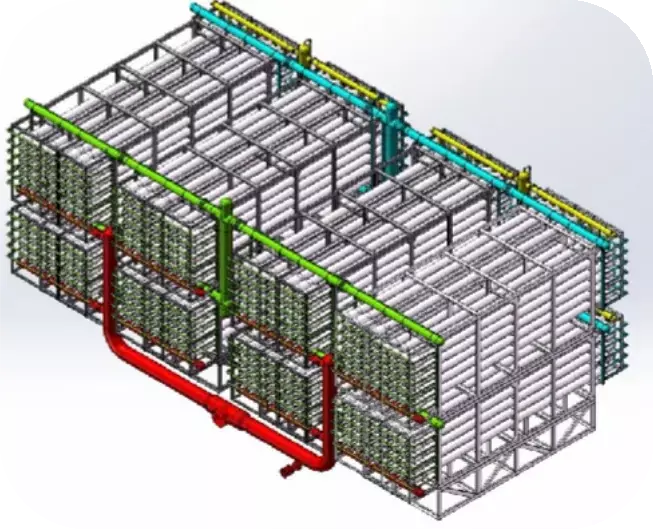
Using advanced reverse osmosis technology to convert seawater into freshwater resources, suitable for coastal areas and island water shortage solutions. Daily processing capacity ranges from 50 to 10,000 tons.
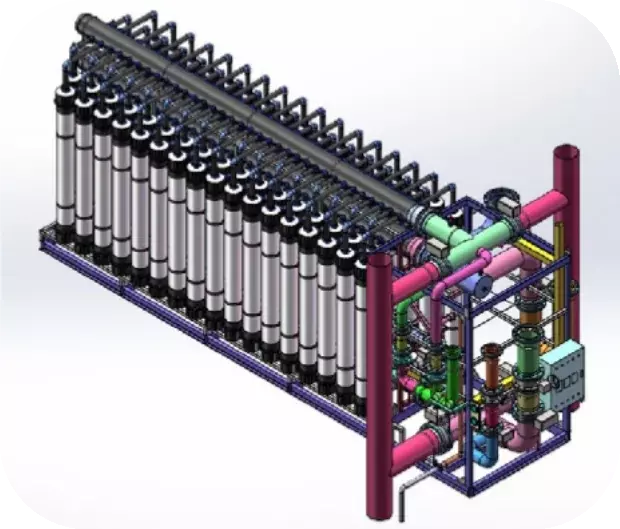
Designed for industrial and municipal wastewater treatment, achieving water resource recycling, reducing enterprise water costs, and meeting environmental requirements.
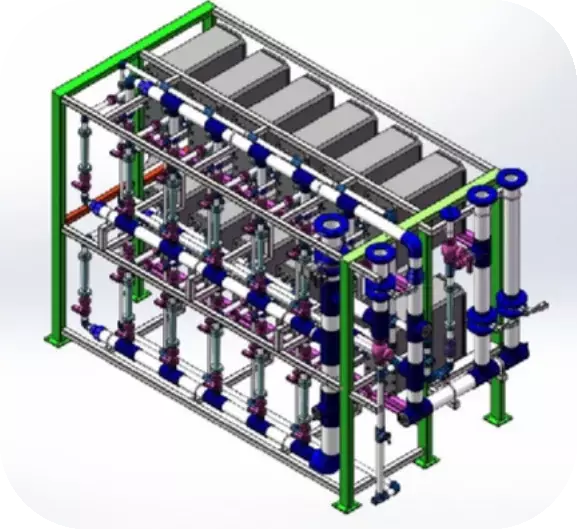
Providing high-purity demineralized water for power, chemical, pharmaceutical, and other industries, using advanced EDI and RO processes to ensure stable and reliable water quality that meets production requirements.
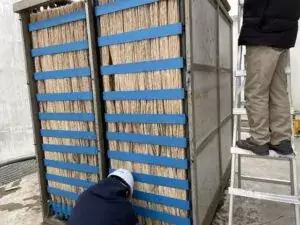
Membrane bioreactor technology combines biological treatment and membrane separation processes, featuring high processing efficiency, excellent effluent quality, and small footprint, suitable for various wastewater treatment projects.
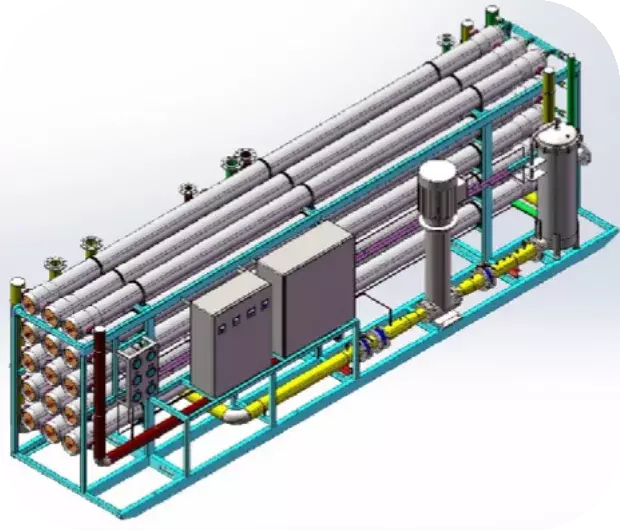
Integrated design pre-assembled on steel structure base, plug-and-play, easy installation, significantly shortening on-site construction period, suitable for rapid deployment water treatment projects.
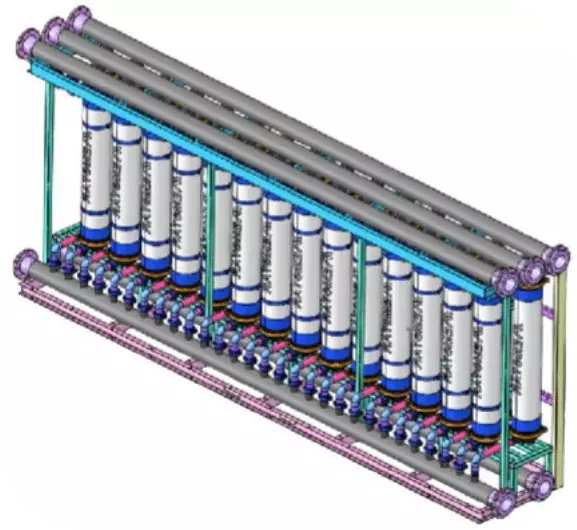
Designed specifically for international markets, compliant with container specifications for easy shipping export, meeting various national certification requirements, providing high-quality water treatment solutions for global customers.
